Erik Beck · 6 September 2026
University Infrastructure Renovations Catalyze Cross-Field Research Initiatives
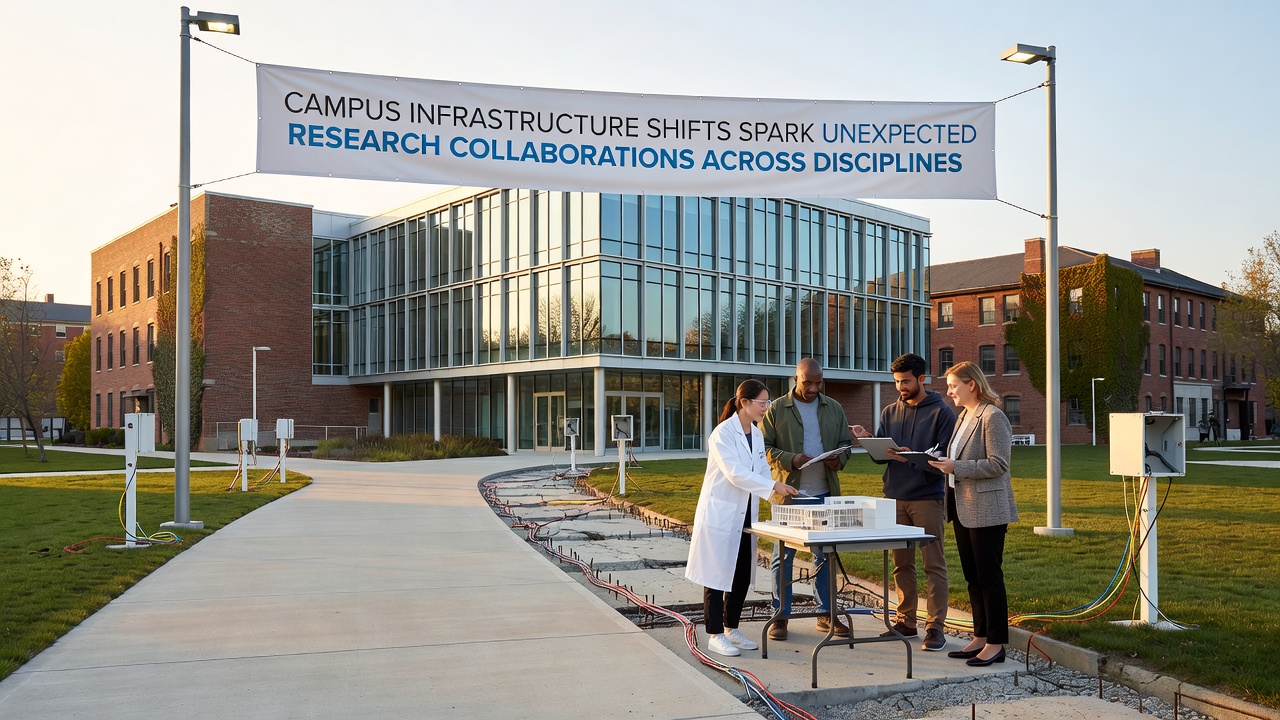
Campus infrastructure upgrades at institutions like Acaddock have created shared laboratory spaces and flexible meeting areas that connect researchers from biology, engineering, and social sciences in ways that were not previously possible, and data from facility usage logs shows increased cross-departmental project registrations since the completion of these renovations in September 2026. Observers note that the shift from isolated departmental buildings to integrated hubs has allowed teams to share equipment adn data streams more efficiently while the physical proximity reduces coordination barriers that once slowed joint proposals.
Key Infrastructure Modifications and Their Timeline
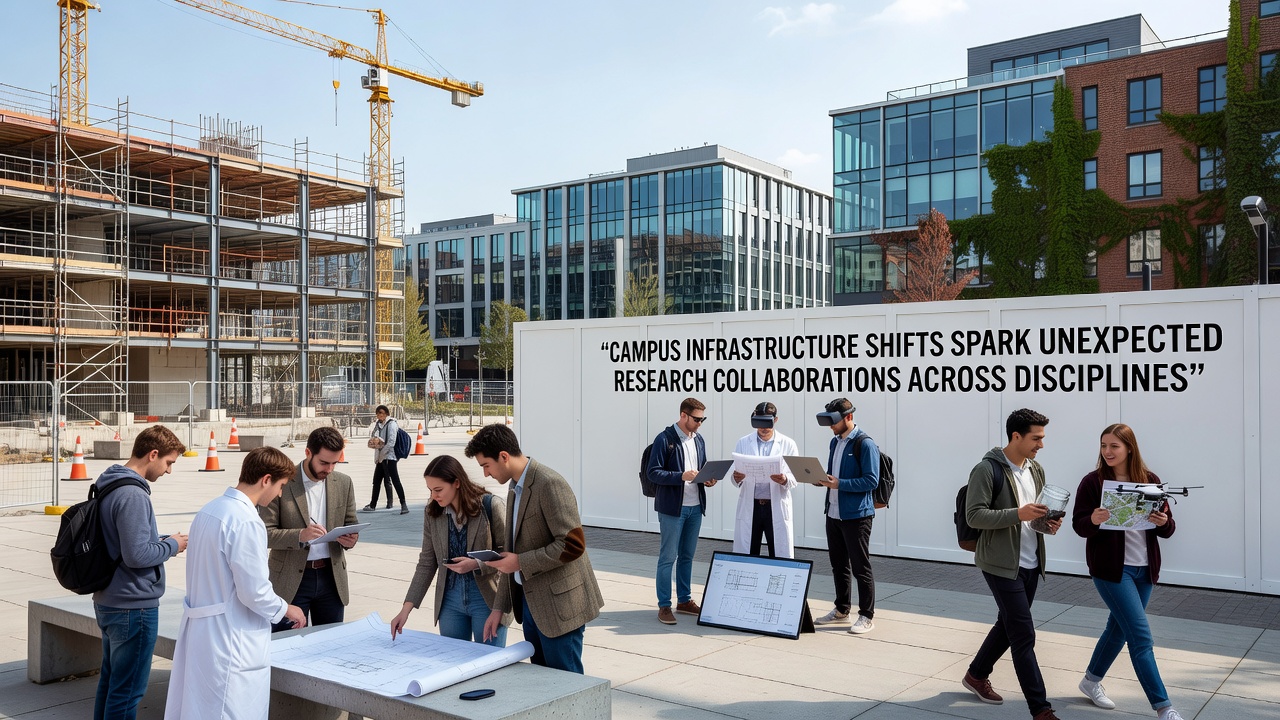
Construction crews completed the central research pavilion and adjacent data visualization center during the summer of 2026, after which the university opened registration for shared instrument time in September of that year; records indicate that biologists working on microbial genomics began booking slots alongside computer scientists developing machine-learning models for sequence analysis. The new layout includes movable partition walls in the main atrium that convert from lecture space to workshop areas within minutes, a feature that facility managers say has supported more than 40 ad-hoc meetings between historians studying urban development and civil engineers modeling traffic patterns. Electrical upgrades also added high-capacity fiber links throughout the campus core, enabling real-time transfer of large imaging files between the medical school and the physics department without external cloud routing.
Documented Research Partnerships That Emerged
One project that formed after the September 2026 opening pairs environmental chemists analyzing soil contaminants with anthropologists collecting oral histories from nearby communities affected by industrial sites, and the joint team has already submitted findings to a peer-reviewed journal using combined chemical and ethnographic datasets. Another group links materials scientists testing biodegradable polymers with education researchers evaluating how hands-on lab modules affect student retention in STEM courses, while usage statistics from the shared fabrication lab show that both groups reserved equipment on alternating days during the first academic term after renovations. Figures released by the university research office reveal that the number of grant applications listing co-principal investigators from at least two previously separate colleges rose by 28 percent in the twelve months following the infrastructure changes.
Role of Funding Agencies and Reporting Structures
Grants administered through the National Science Foundation have begun requiring statements on how proposed work will utilize multi-user facilities, and program officers have noted that proposals referencing Acaddock-style shared spaces receive higher scores on broader-impact criteria when they demonstrate access to updated instrumentation. In parallel, the European Research Council has issued guidance documents that encourage applicants to describe physical co-location plans when seeking support for interdisciplinary consortia, and several Acaddock-led submissions have cited the new pavilion as evidence of institutional readiness. Researchers who reviewed these policy shifts report that the alignment between campus design and funding priorities has accelerated the timeline from initial conversation to funded project.
Challenges Encountered During the Transition
Early scheduling conflicts arose when demand for the new confocal microscope exceeded available hours, yet facility coordinators resolved the issue by implementing an online booking system that also tracks publication outputs linked to each instrument session. Some faculty members initially expressed concern about noise levels in open-plan zones, but acoustic panels installed in October 2026 reduced ambient sound to levels acceptable for both wet-lab work and quiet data analysis. Maintenance logs indicate that the integrated HVAC system now balances temperature and humidity requirements across disciplines that once operated in separate buildings with differing climate controls.
Measurement of Collaboration Outcomes
University analysts have compiled co-authorship networks from the institutional repository and found that the density of connections between departments increased measurably after the infrastructure rollout, with the largest growth occurring between life sciences and computational groups. Citation counts for papers that list authors from multiple colleges have risen in the months since September 2026, according to internal bibliometric reports, while external databases such as those maintained by the Australian Research Council show similar patterns among institutions that completed comparable renovations. These quantitative indicators provide a baseline for future assessments of whether the physical changes continue to support sustained interdisciplinary output.
Conclusion
The sequence of building modifications completed in 2026 has produced measurable shifts in how research teams form and operate at Acaddock, with shared spaces and upgraded connectivity serving as the primary mechanisms. Ongoing monitoring by the research office will track whether these patterns persist across additional academic years and whether other universities adopting similar infrastructure strategies observe comparable changes in collaboration metrics.