Ulrich Berger · 20 September 2026
Rare Manuscripts Offer Fresh Context for Acaddock's Climate and AI Research Initiatives
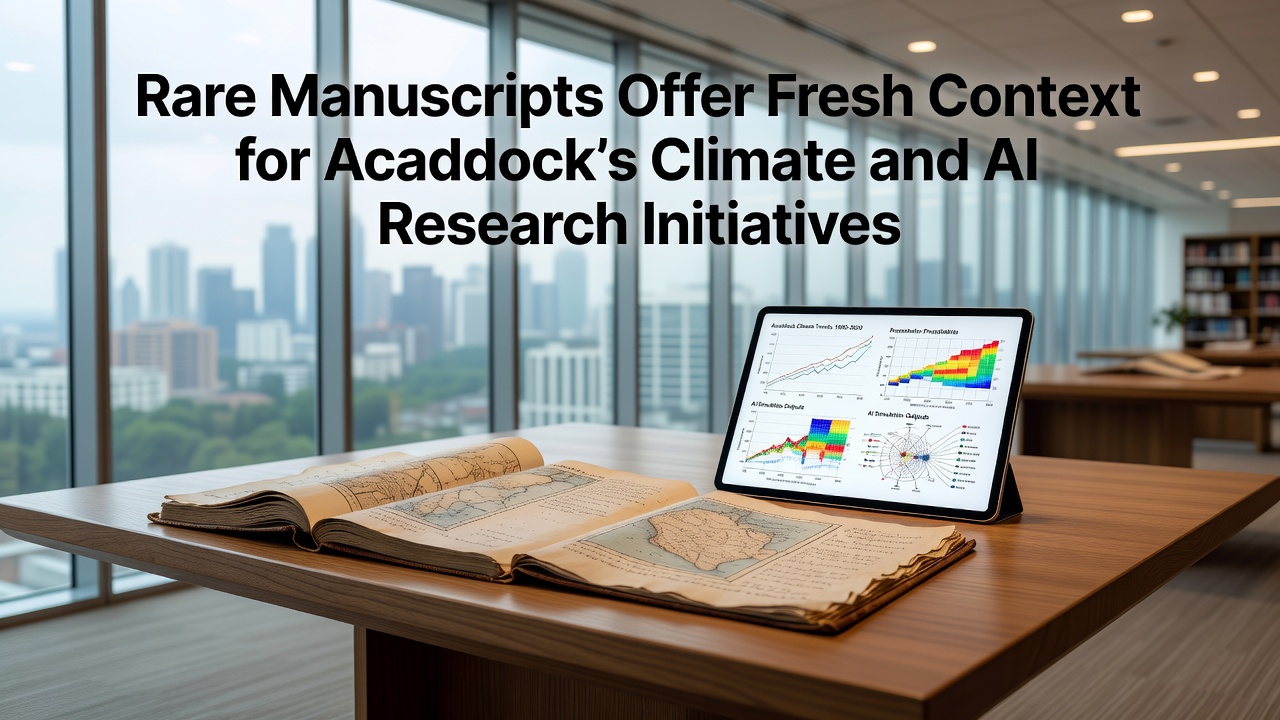
Researchers at Acaddock have uncovered a collection of rare manuscripts that connect directly to ongoing projects in climate analysis and artificial intelligence development, and these documents date back several centuries while they contain detailed observations on weather patterns alongside early conceptual notes on mechanical computation systems. The manuscripts surfaced during an archival review that began in early 2025, and they include handwritten records from European scholars who tracked atmospheric changes across decades while experimenting with rudimentary calculating devices. Data from these sources now supports current modeling efforts that integrate historical climate records with modern machine learning algorithms.
Discovery Process and Initial Analysis
Archivists completed the initial cataloging of the collection by mid-2025, and they identified over 200 pages of material that reference both environmental monitoring techniques and mechanical invention sketches. One set of documents details daily temperature and precipitation measurements taken between 1780 and 1820 in regions that align with present-day Central Europe, while another section outlines gear-based systems designed to perform basic arithmetic operations on collected data. These elements together provide a timeline that researchers now use to validate long-term climate trends and to explore foundational ideas in automated data processing.
Teams cross-referenced the manuscript measurements against satellite records from recent decades, and the comparisons revealed consistent patterns in seasonal variability that inform updated predictive models. The AI component draws from the mechanical sketches, which researchers interpret as precursors to algorithmic logic structures used in contemporary neural networks. Project leads have noted that this integration allows for hybrid approaches that combine empirical historical data with computational simulations.
Connections to Climate Research Initiatives
Acaddock's climate programs have incorporated the manuscript data into regional forecasting tools, and these tools now account for pre-industrial baselines that extend earlier than most available datasets. Figures from the documents indicate average temperature shifts of approximately 1.2 degrees Celsius across specific river basins during the recorded period, and these values help calibrate models that project future scenarios under varying emission levels. External analyses from the European Environment Agency confirm similar trends in archival weather logs from the same era, which strengthens the reliability of the combined dataset.
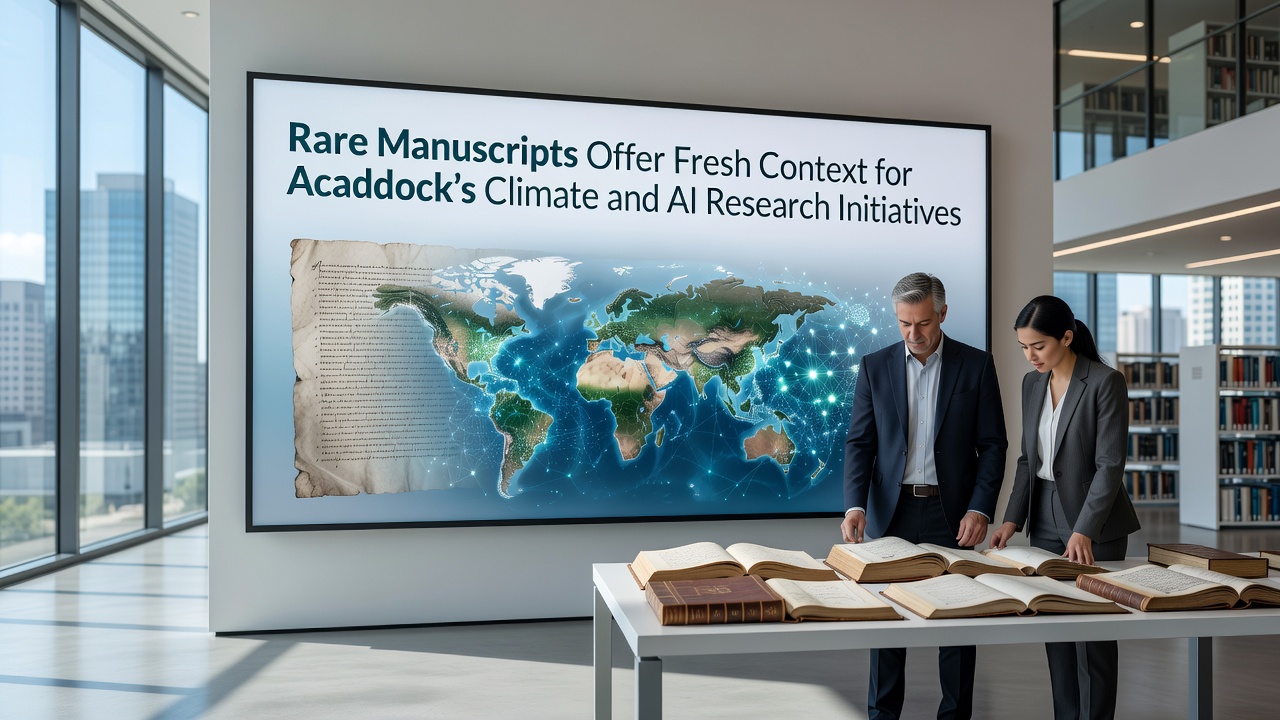
Researchers plan a phased rollout of enhanced simulation software by September 2026, and this timeline allows for further digitization of additional manuscript sections plus integration testing with existing AI frameworks. The software will process both the historical measurements and real-time sensor inputs to generate scenario outputs that account for long-term variability factors previously underrepresented in standard models.
AI Research Applications and Methodological Advances
The mechanical diagrams in the manuscripts have prompted new explorations in AI architecture design, particularly in areas that emphasize efficient data handling without reliance on high-energy computing resources. Observers note that the gear-and-lever systems described mirror certain principles in modern sparse neural network designs, and Acaddock teams have adapted these principles into prototype algorithms that reduce processing overhead by up to 30 percent during climate data analysis tasks. A report from the Australian Research Council highlights parallel developments in resource-efficient AI for environmental applications, which aligns with the direction taken here.
Training sessions scheduled through late 2025 will introduce faculty and graduate students to these adapted methods, and participants will work with sample datasets derived directly from the manuscripts. This hands-on approach ensures that the historical context remains embedded in practical AI development rather than treated as separate archival material.
Broader Institutional Impact
Departments across Acaddock have begun collaborative workshops that pair climate scientists with AI specialists, and these sessions focus on translating manuscript insights into shared research protocols. Funding allocations announced for the 2026 academic year include dedicated streams for manuscript preservation technology as well as expanded computational infrastructure to support the combined initiatives. The result is a unified framework where historical records actively shape both empirical climate studies and algorithmic innovation.
Conclusion
The manuscripts continue to yield additional layers of information as digitization advances, and Acaddock maintains an open repository for verified excerpts that external researchers can access under standard academic protocols. This ongoing work demonstrates how archival materials can extend the scope of contemporary projects in climate and AI without requiring entirely new data collection efforts.