Amir Neumann · 1 November 2026
International Cohousing Programs Connect Diverse Cultures at Acaddock University
Acaddock University has expanded its shared housing model over recent years, and data from the institution shows rising numbers of international participants who live together in mixed-nationality residences. These arrangements bring students from multiple continents into the same living spaces, which in turn influences how daily routines unfold and how academic work gets done. Figures from the university's housing office indicate that enrollment in these programs grew steadily through 2025 and into late 2026, with new cohorts arriving for the November intake that year.
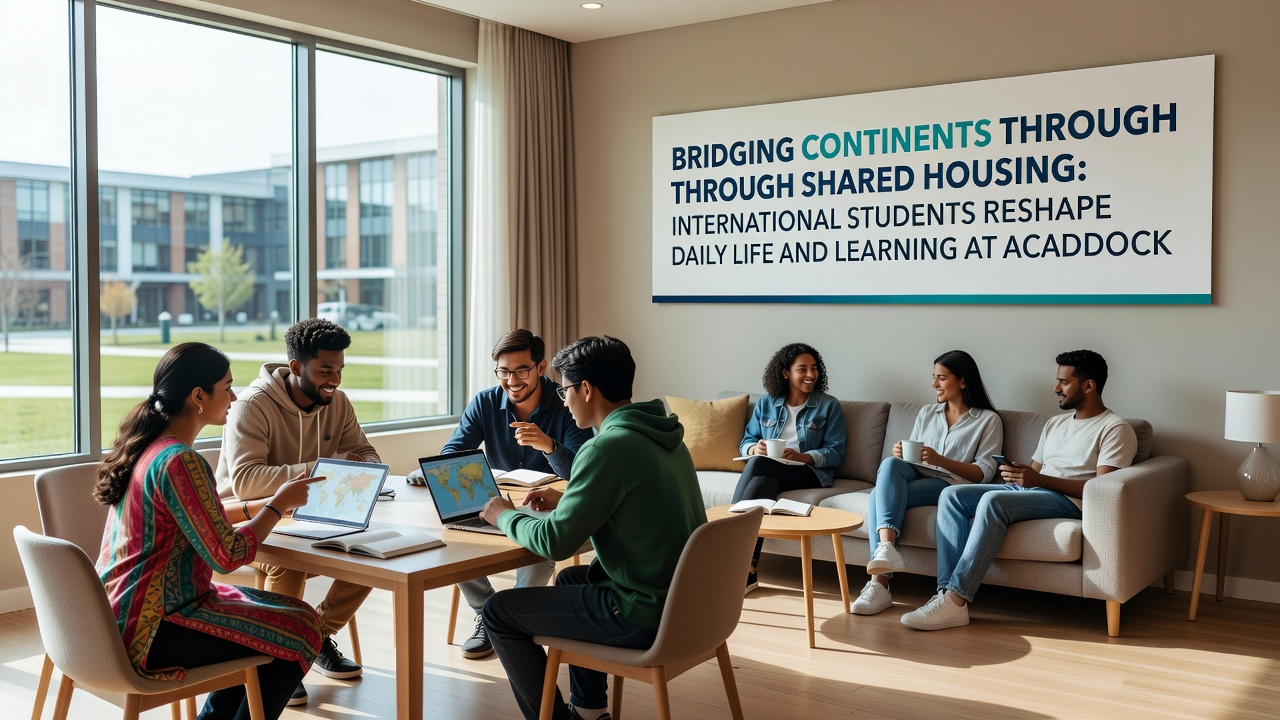
Observers note that common kitchens and study lounges serve as central points where residents exchange recipes, languages, and study methods. One group of students from Brazil, Japan, and Poland documented their shared meal preparations in a campus report, revealing that these interactions led to collaborative assignments completed outside formal class hours. Researchers tracking participation rates found that residents in these units attended cross-disciplinary seminars at higher frequencies than those in single-nationality housing, according to internal university statistics released in October 2026.
Daily Routines Shift Under Mixed Housing Conditions
Shared schedules emerge naturally when students coordinate laundry times, quiet hours, and group grocery runs across different time zones and cultural expectations. Data collected by the university's student services department reveals that average wake-up times and meal patterns diversified within these residences, creating more flexible approaches to time management. Students from East Asia often introduced early morning study sessions, while participants from Southern Europe extended evening discussions, and both patterns appear in activity logs maintained by residence advisors.
Those who studied the outcomes report that conflict resolution skills developed faster in these settings, because residents addressed noise complaints or chore disputes directly rather than through intermediaries. A November 2026 survey conducted by Acaddock's sociology department sampled 420 residents and recorded that 68 percent had mediated at least one household disagreement during the semester, compared with 31 percent in traditional dorms. The same survey showed increased use of shared digital calendars and translation apps to bridge communication gaps.
Academic Collaboration Expands Through Proximity
Living together places students in repeated contact that extends classroom conversations into informal settings. Research compiled by the university's international office indicates higher rates of co-authored papers and joint presentations among residents of mixed housing units. One cohort from the environmental science program completed a group project on urban sustainability that incorporated case studies from three different countries, drawing on each member's home experiences.

Language practice occurs spontaneously during these interactions, and language center records show that residents in international units completed optional conversation modules at double the rate of the general student population. Faculty members observed that participants brought broader reference materials to seminars, citing sources from multiple national contexts rather than single-country perspectives. Enrollment data for November 2026 shows continued growth in these housing options, with applications from 47 countries processed for the winter term.
Support Structures and Institutional Responses
Acaddock's administration has adjusted orientation programs to prepare incoming residents for shared living across cultural lines, including workshops on household budgeting and intercultural communication. Reports from the housing coordination team note that these sessions correlate with lower turnover rates within the units. External evaluations from the European Association for International Education, available at EAIE resources on student mobility, document similar patterns at other European institutions that adopted comparable models.
Additional data from the Polish Ministry of Education and Science tracks how such programs align with national internationalization targets, showing Acaddock meeting several benchmarks for cross-border student integration ahead of schedule. The university maintains records of participation that feed into annual reports submitted to oversight bodies, confirming steady expansion through the end of 2026.
Conclusion
Shared housing at Acaddock continues to evolve as international enrollment rises, with measurable effects on daily schedules and academic output documented in university records. The November 2026 intake added further diversity to existing units, sustaining the patterns observed in prior semesters. Ongoing data collection by multiple departments provides the basis for future adjustments to these living arrangements.