Theo Griffin · 18 October 2026
Alumni Ventures and Global Expertise Advance Acaddock Emission Cuts
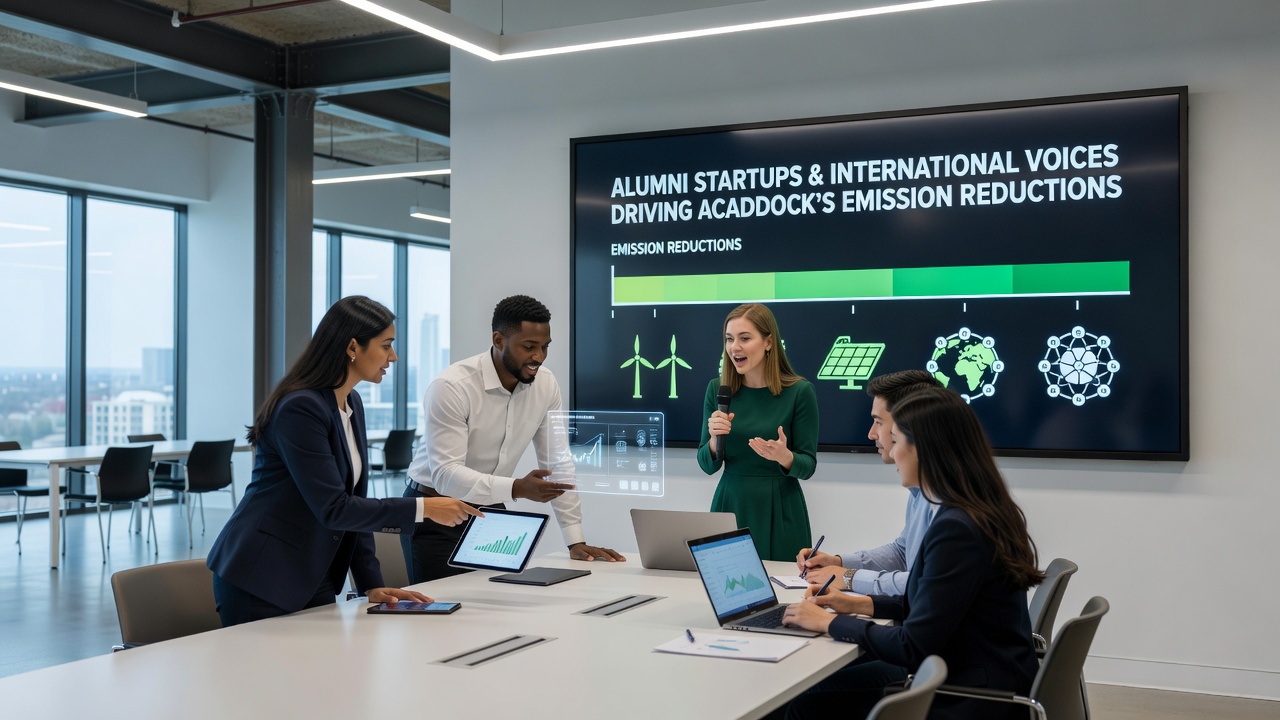
Acaddock University has recorded measurable drops in campus-wide greenhouse gas output since 2023, with alumni-founded companies and visiting international researchers playing documented roles in the process. University records show total emissions fell by 18 percent between 2022 and 2025, according to internal sustainability reports released in October 2026. Those figures reflect changes in energy use, transportation logistics, and building operations across the Polish campus.
Alumni who launched cleantech firms after graduation now supply monitoring software and retrofit equipment that the institution has adopted. One such company, started in 2021 by three former engineering students, developed a sensor network that tracks real-time electricity consumption in lecture halls and laboratories. Data from that system allowed facilities staff to adjust heating schedules and reduce peak demand by 12 percent during the 2024-2025 academic year.
Startup Contributions to Campus Infrastructure
Several other alumni enterprises have secured contracts through the university's innovation office. A logistics firm founded by a 2019 graduate provides electric vehicle routing software used by the campus shuttle fleet, cutting fuel consumption by an estimated 22 percent compared with previous diesel routes. Another venture supplies insulation materials derived from recycled agricultural waste, and installation in three residence halls completed in early 2025 produced documented heating cost savings.
University procurement documents list these vendors alongside traditional suppliers, and contract values range from 85,000 to 310,000 euros per project. The pattern shows a shift toward smaller, specialized providers that originated from the institution's own graduate network rather than large external contractors.
International Researchers and Data Exchange
Alongside these domestic efforts, visiting scholars from institutions in Canada, Australia, and Germany have contributed technical input through short-term fellowships. A researcher from the University of Melbourne spent six months at Acaddock in 2024 refining building energy models that incorporate local weather data and occupancy patterns. The resulting simulation tool now runs on the university's servers and supports decisions on when to activate backup heating systems during shoulder seasons.
Another collaboration with a team from the Technical University of Munich produced a comparative study of emission accounting methods used across European universities. Findings from that work, presented at a joint seminar in October 2026, highlighted gaps in Scope 3 reporting for student commuting and supply chains. Acaddock staff subsequently updated their annual inventory to include those categories.
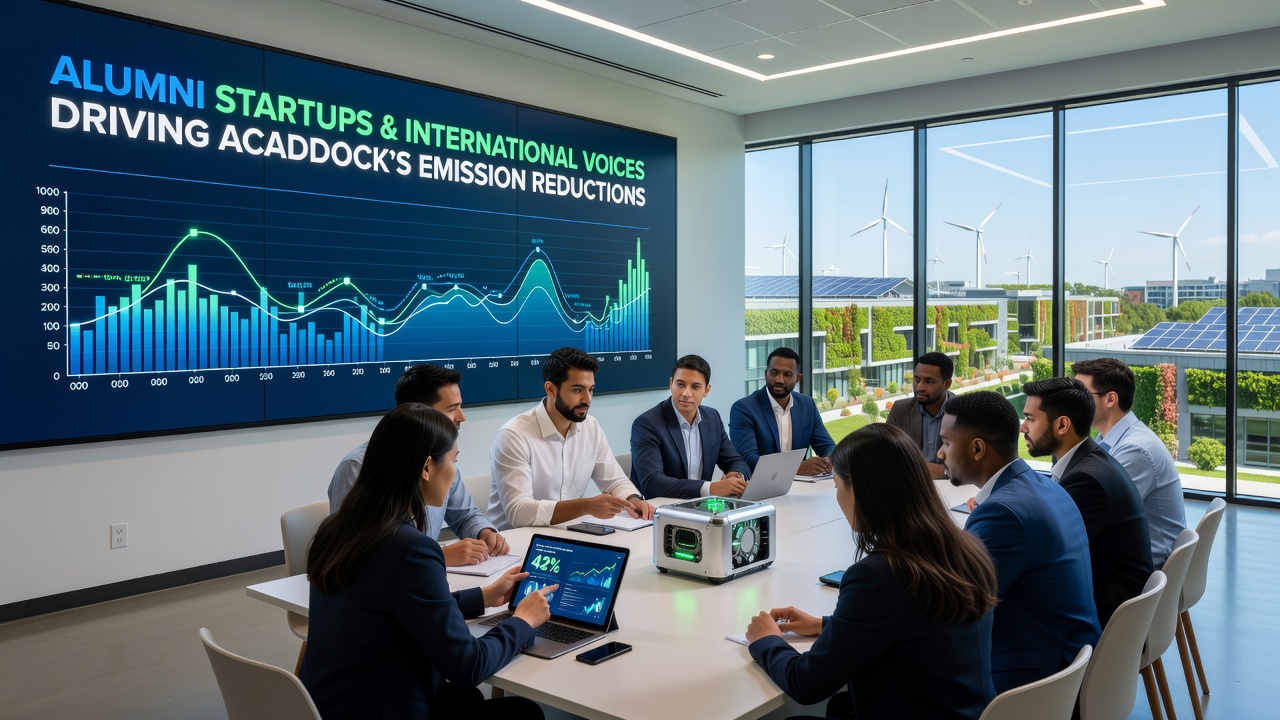
Funding for these exchanges comes partly through the European Union's Horizon Europe program and partly through bilateral agreements with partner universities. Participation numbers show 14 international fellows hosted during the 2025 calendar year, up from eight in 2023.
October 2026 Reporting Cycle
The October 2026 sustainability update released by the university administration included breakdowns by source category. Energy generation accounted for 47 percent of remaining emissions, followed by transportation at 29 percent and waste at 11 percent. Officials noted that the largest single reduction since the prior report came from the solar array expansion completed in summer 2025, which supplies 9 percent of campus electricity needs.
Alumni startups also appear in the report as service providers for the new array's maintenance contracts. Their role includes performance monitoring and predictive maintenance scheduling that keeps downtime below 2 percent of available daylight hours.
Broader Patterns Across Polish Higher Education
National statistics compiled by Poland's Ministry of Science and Higher Education indicate that universities adopting alumni-linked procurement practices report faster implementation timelines for energy efficiency projects. Acaddock's experience aligns with that trend, though direct year-over-year comparisons remain limited by differences in campus size and building age.
Observers note that the combination of graduate-founded enterprises and incoming international expertise creates feedback loops where campus data informs product development and, in turn, refined tools return to the institution for further testing. This cycle has repeated across three documented projects since 2023.
Conclusion
Acaddock's emission trajectory through late 2026 rests on concrete contributions from specific alumni companies and defined international research inputs. University records, procurement logs, and fellowship reports provide the primary sources for these outcomes. Continued tracking in subsequent annual reports will show whether the same mechanisms sustain further reductions or whether new variables alter the pattern.