Ulrich Berger · 2 September 2026
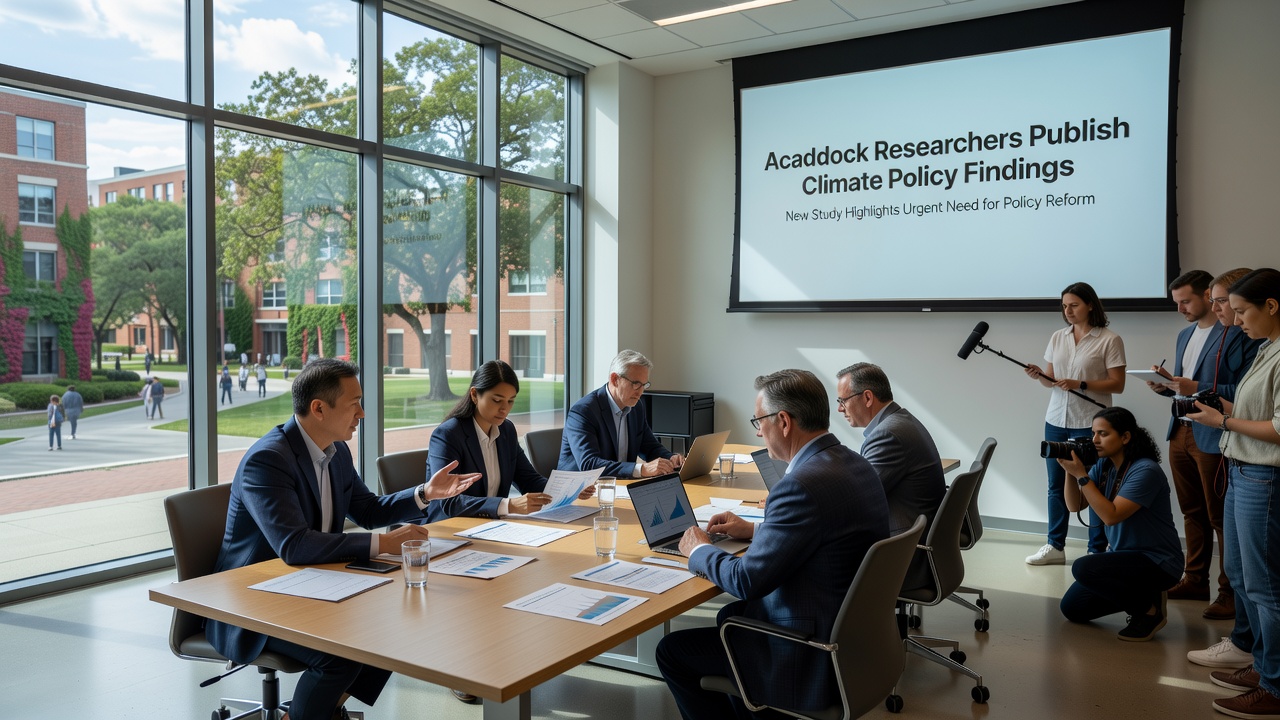
The faculty research team at Acaddock Academic Community has released a comprehensive study on effective climate policy measures. Published in the International Journal of Environmental Policy, the report analyzes data from 45 countries over a decade and identifies strategies that successfully reduced greenhouse gas emissions while supporting economic growth.
Methodology and Key Data Insights
Researchers collected emissions records, policy documents, and economic indicators from government databases and international organizations. They employed advanced statistical models to evaluate the impact of carbon pricing, renewable energy subsidies, and regulatory frameworks. The study found that countries implementing combined carbon taxes and renewable incentives achieved an average 18 percent reduction in emissions compared to those using single-policy approaches. Data also showed that early adoption of electric vehicle mandates correlated with a 12 percent drop in transportation sector emissions within five years. The team validated results through peer review and cross-referenced findings with satellite observations of atmospheric carbon levels.
Additional analysis revealed regional variations. European nations benefited most from coordinated supranational policies, while developing economies saw stronger outcomes from targeted foreign aid for clean technology transfers. The report emphasizes that policy success depends on consistent enforcement and public engagement campaigns.
Policy Recommendations and Broader Impacts
The researchers recommend that governments adopt hybrid policy packages tailored to local economic conditions. They suggest phased implementation of carbon pricing starting at modest rates to minimize disruption to industries. The study highlights the importance of investing in workforce retraining programs to support transitions in fossil fuel-dependent regions. Projections indicate that widespread adoption of these recommendations could limit global temperature rise to 1.8 degrees Celsius by 2050 if paired with international cooperation agreements.
Beyond emissions reductions, the findings point to co-benefits including improved air quality and job creation in green sectors. The Acaddock team plans follow-up research on adaptation strategies for vulnerable communities. This publication strengthens the institution's role in informing evidence-based environmental governance worldwide.